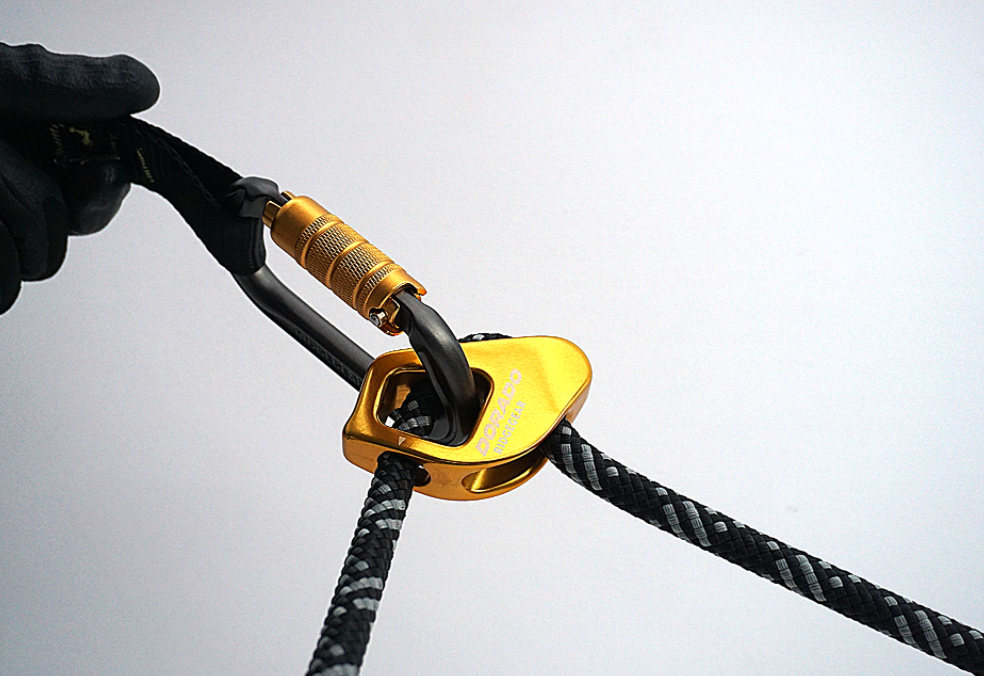
We are offering two types of Adjustable Work Positioning Lanyards.
As a working connecting device between Running-Line or Anchor Point and Safety Harness they do the same job, but the adjustment is applied in a different way.
I have described this in this post and prepared a short demonstration movie that I hope fully explains the difference.
We encourage you to call or message us if you would like to discuss this or any of our Products and Training Courses.
Click the Button to watch a short movie that shows the difference between the two types of Work Positioning Lanyards that we sell.
In a Temporary Work Restraint System or Running-Line an Adjustable Work Positioning Lanyard is the most commonly used connecting device between the Safety Harness and Anchorage Device ) Horizontal Lifeline.
This is a popular component because of its ease of adjustment for those using it because they may need constant mobility between work areas which need them to be in tight restraint to avoid falling over open edges.

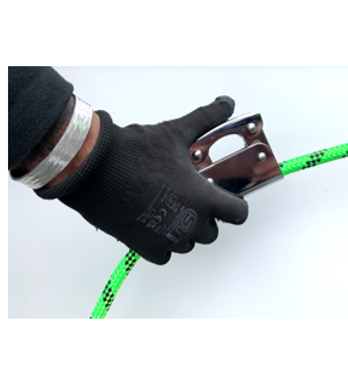
The most commonly used Adjuster is the palm sized steel cam device known as a Rope Grab.
Rope grabs are designed to lock onto a Rope during a fall incident, but they can badly damage the Rope.
In a fall incident the Rope Grab engages via a camming mechanism—to serrated jaws, these force the rope to stop suddenly.
The rapid engagement of the Rope rab is an aggressive action when serrated jaws bite into the rope creating a high-stress point which can damage the outer sheath of a kernmantle rope.
Rope Grabs may slide down the Lanyard Rope by as much as 1 metre before fully arresting a fall.
The Dorado Work Positioning Lanyard offers an alternative to the Rope and Grab type Lanyards but replaces the Rope and Grab adjuster with an Aluminium adjustment block.
This adjuster has no moving parts, Rope is simply fed in and out of it angled to lock off immediately when under tension.