Description

Unlock 70% Funding for Construction Training with the CITB Employer Network.
Discover how the CITB Employer Network simplifies access to construction training and funding, offering up to 70% coverage on training costs for registered UK employers. This initiative is designed to address skill gaps, enhance workforce capabilities and reduce administrative burdens for business in the construction industry.
Eligibility and Application
Employers must be registered with CITB, up to date on levy payments and part of an active Employer Network in their region.
MODULE 3- COURSE SYLLABUS
HEIGHT SAFETY AND RESCUE TRAINING FOR WORKING ON REINFORCED CONCRETE FRAME STRUCTURES
Working at height on a concrete structure presents height related safety issues to those constructing and dismantling formwork, erecting temporary structures and installing and removing temporary edge protection systems.
This training course applies the principle of the work at height hierarchy selecting the correct equipment and its proper use as follows.
This site based training course delivers the following syllabus
PERSONAL FALL PROTECTION EQUIPMENT (PFPE)
We aim to communicate a good understanding of working whilst using PFPE in line with the code of practise for the selection, use and maintenance of personal fall protection systems BS8437:2005.


LEGISLATION OVERVIEW
WORK AT HEIGHT REGULATIONS
Employers legal responsibilities.
Employee’s legal responsibilities.
THE WORK AT HEIGHT HIERARCHY
Awareness, identification and the danger of gravity, falls and injury when working at height.
Understanding product instructions, serial numbers and inspection dates.
PRACTICAL TRAINING & DEMONSTRATION
PERSONAL FALL PROTECTION EQUIPMENT (PFPE)
We aim to communicate a good understanding of working whilst using Personal fall protection equipment in line with the code of practise for the selection, use and maintenance of personal fall protection systems BS8437:2005.
PRE-USE INSPECTION of safety critical PFPE components, identifying damaged or worn components, maintenance, cleaning and storage of them.
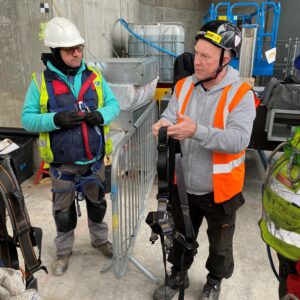
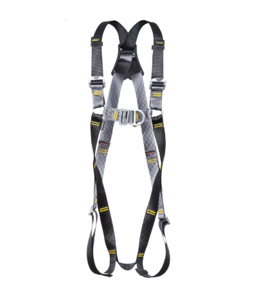
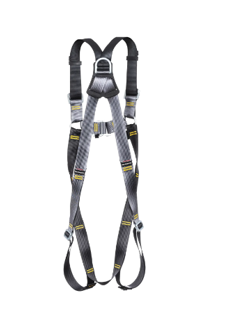
Donning a Safety Harness and adjusting to fit so that the wearer is protected in a fall
CONNECTING A HARNESS TO WORK RESTRAINT & FALL ARREST COMPONENTS
Work Restraint Lanyard
Adjustable Work Positioning Lanyard
Self-Retracting Fall Arrestor
Collective protection
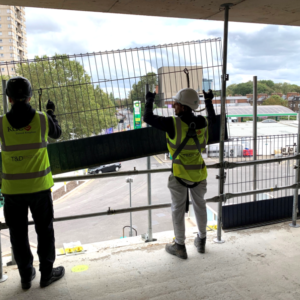
A Temporary Edge Protection System installed around the perimeter of the structure will protect anyone working in this area without them taking any action.
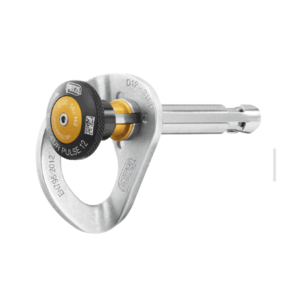
The system integrity depends on secure and accurate anchorage into the concrete floors, correct installation of Posts and Barriers with methods in place to ensure that Barriers won’t lift in high winds.

Work Restraint
Work Restraint is higher on the Work at Height Hierarchy and should be considered before Fall Arrest.
Work Restraint can be implemented for decking -out for slabs using Anchor slings which are wrapped around column starter bars connected to a horizontal lifelines which is tensioned.
Formworkers connect their safety harnesses to the Horizontal lifeline using an Adjustable work positioning lanyard which is adjusted as decking work progresses.

Fall Arrest – Alsipercha Concrete anchors
Fall Arrest is often used during Reinforced concrete or precast concrete construction.
When placing Decking on a concrete deck support system an Alsipercha system is often used.
Alsipercha is a steel or aluminium davitt that sits in a column with a self-retracting fall arrestor attached at its end point.
This rotates offering a circular area of overhead anchorage, however this area is limited to the length of the Davitt arm.
RESCUE TRAINING
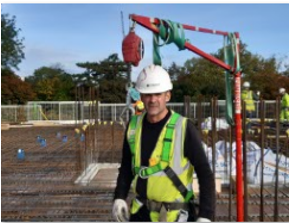
The Rescue training part of this course is for anyone working at height who could be needed to rescue a colleague who has fallen whilst attached to a Work Restraint or Fall Arrest system.
This Rescue Training course simulates
1 Rescue from a Temporary works structure with a height less than 3500mm.
2 Rescue from a Temporary works structure over 3500mm height.
3 Rescue from a built structure.

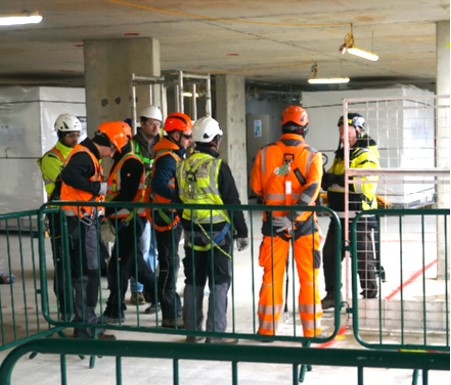
A briefing will be held to discuss the structures specifics, areas of concern, any accidents or near-misses and the trainer will describe the course to be delivered.
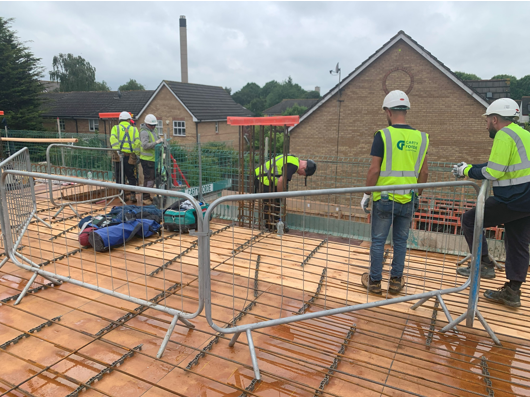
TRAINING ENVIRONMENT
An Exclusion zone is erected to control entry to permitted trainees.
A Rescue Ladder is attached to the Anchor Point ( Running-line or Single anchor) and unfurled out of the structure.
This is the first Rescue option but relies on the faller being conscious and mobile.


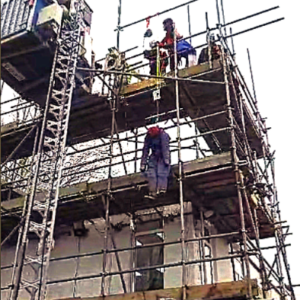
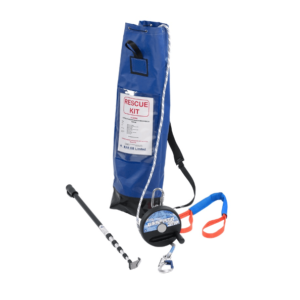
A Dummy is lowered from a suspended deck and rescued by each trainee using a Rescue Pole to connect the Rescue Winch to the fallers Harness.
The dummy is rescued by Manual lift, Hoisted up, Lowered on the winch.

CERTIFICATION
Upon successful completion of the course each delegate is provided with certification carrying a 36 month validity period.