
A Tool Lanyard is a connecting device that is placed between a Tool or Object and an Anchor Point.
If the Tool or Object accidentally falls or is dropped, the Tool Lanyard arrests its fall.
The consequence of an untethered tool or object falling can cause injury or damage to anyone or anything in its fall path.
By following these simple steps you can choose the correct Tool Lanyard for the Tool and Object to be tethered and the Working environment it is being used in.
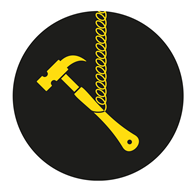

3kg. LOAD RATED TOOL LANYARDS


Click image for product information

5KG.LOAD RATED TOOL LANYARDS
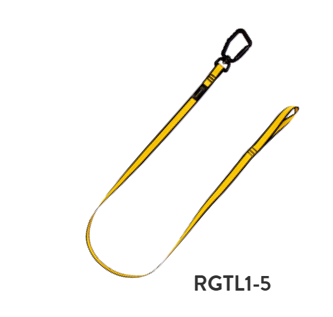
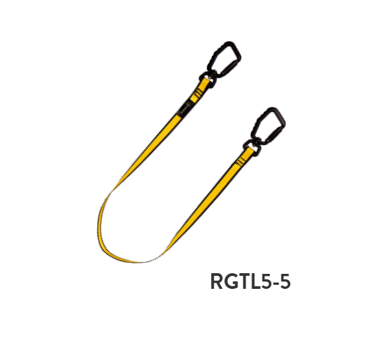
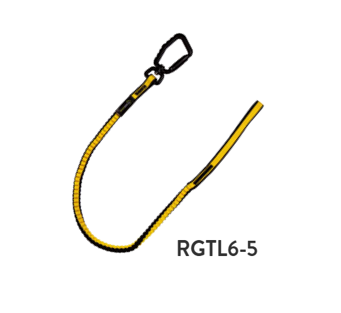
Click image for product information

10KG. LOAD RATED TOOL LANYARDS

Click image for product information
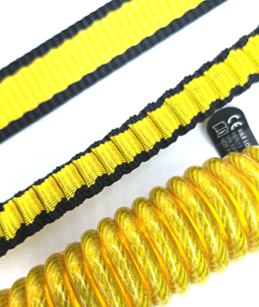
TYPES OF TOOL LANYARDS
PLASTIC COIL LANYARDS
Coiled Tool Lanyards are made from steel with a durable heavy-duty, plastic protective sleeve.
They are designed to secure tools when working at height, preventing them from being dropped and causing injury or damage whilst offering the benefit of not trailing within the working area.
Coiled Tool Lanyards are best suited for lightweight small hand tools, such as screwdrivers, spanners, or electronic devices which need to be kept close to the wrist and also benefit from swivelling connectors which prevent tangling when using rotating tools.
The Load-rating for RGTL14 Coil Lanyards is 3kg.

FLAT WEBBING TOOL LANYARDS
Non-Elasticated Tool Lanyards made from flat webbing ,a good option when Tools and Objects are tethered to a fixed anchor point as opposed to the users wrist or Toolbelt where the weight if a falling tool can cause injury if its fall is not partially absorbed.
They offer economy as they cost less than Elasticated Tool Lanyard.
ELASTICATED TOOL LANYARDS
Elasticated or Bungee Tool Lanyards are useful for connecting Handtools such as hammers or small Cordless Tools such as Impact Wrenches.
If the Tool or Object weighs 3kg or less it can be attached to the users Toolbelt or Safety Harness.
If a Tool is dropped, Elastication absorbs some of the energy reducing the load on the user or the anchor point.
KINETIC TOOL LANYARDS
SafetyRespect Heavy Duty Tool Lanyards are made from Kinetic Polyester Webbing which has an inner strand. In a fall event this will stretch and a red indicator stitch will pop if the attached tool or object is dropped signalling that it must be immediately retired from service
There is an outer webbing sleeve that protects the inner strand which is made from high contrast webbing to make visual inspections easier.
TOOL LANYARDS- ADVICE & INFORMATION
TERMINOLOGY
Attachment or Connection – The connection point on the tool or object. This may have to be added to the tool using tape and Dee-Rings or similar.
Tool Lanyard or Tether – a flexible extension point used to connect a tool/attachment to an anchor point which may be the tool users arm or workbelt.
Anchor Point – a secure connection point which may be part of a structure or the tool users arm, workbelt or safety harness.
PLANNING & USING TOOL LANYARDS
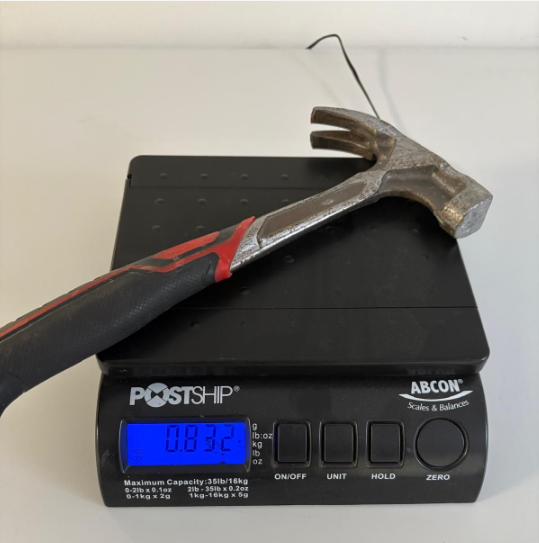
WEIGH THE TOOL OR OBJECT THAT NEEDS TETHERING.
Check the weight of the tool before choosing a Connection, Lanyard or Anchor Point,remembering to include the weight of batteries for cordless power tools.
Select a Tool Lanyard with a higher load-rating, for example, a cordless drill could weigh 4kg so the appropriate load-rated tool lanyard is 5kg.
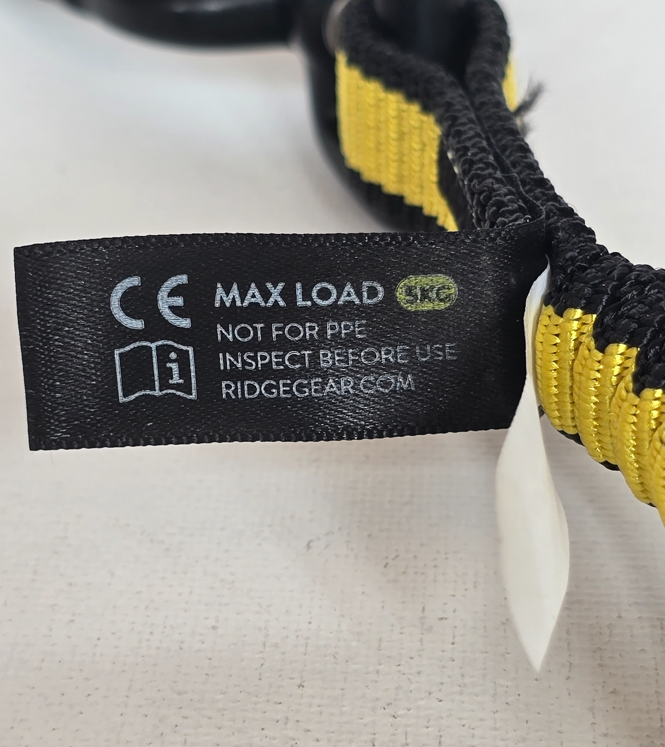
The load-rating of the Tool Lanyard is clearly printed on the label. Don’t attach a Tool that is heavier than this.
PRE-USE INSPECTION
Before each time the Tool Lanyard is to be used, carry out a thorough inspection.
If it shows signs of excessive wear, tears, rips, exposed threads or broken or non-functioning connectors, remove from use immediately.
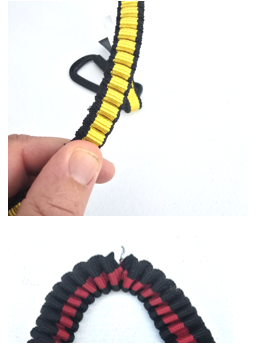
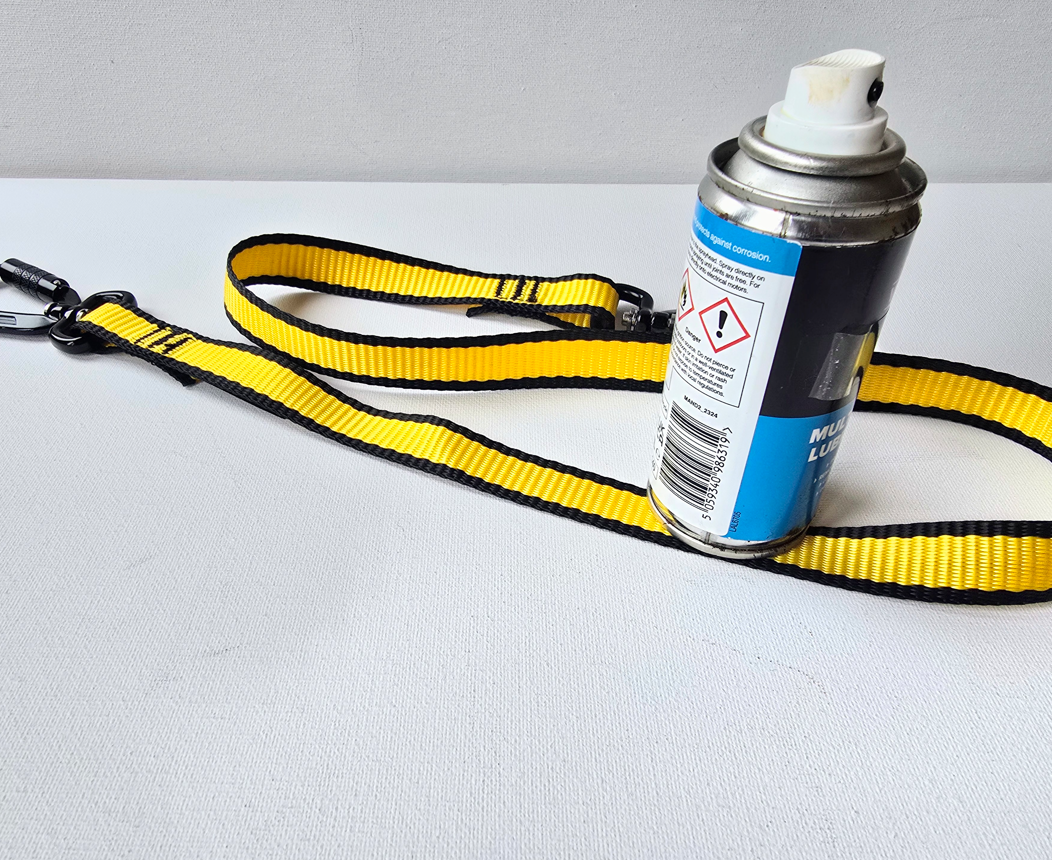
Ensure that the Tool Lanyard is not contaminated by chemicals which can damage its materials.
CHOOSE A TOOL LANYARD WITH THE CORRECT LENGTH
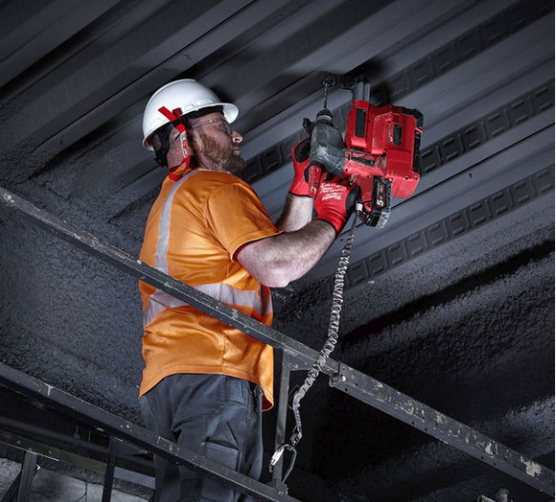
It is important to consider the working environment where the Tool Lanyard will be used with particular emphasis on its length if when at full stretch in a dropped tool incident.
If there are others working beneath you or you are working over breakable objects and for the protection of the tethered tool, you should ensure that the tool is shorter than the dropping distance from where it is being used.
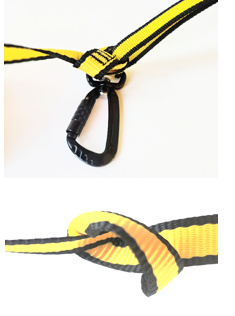
Don’t tie Tool Lanyards together to extend their length.
Do’t tie knots in Tool Lanyards to reduce their length.
Ensure that the combined length of your Tool Lanyard system does not exceed 1.5 metres. This includes Anchor and Tool Attachments.
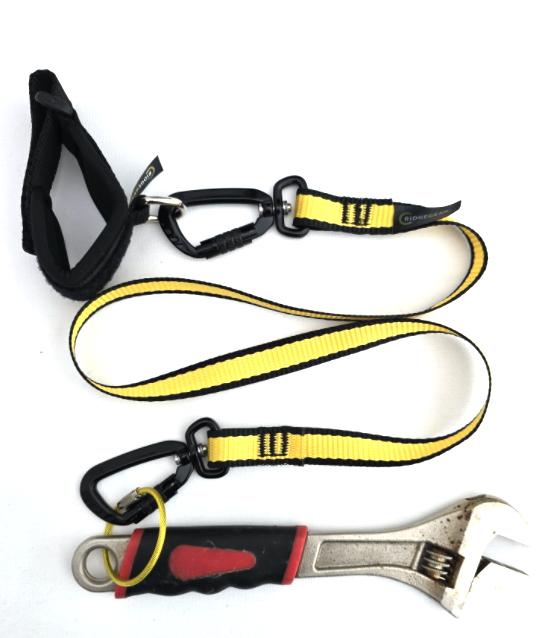
CONNECTING TOOL LANYARDS TO TOOLS
Many modern tools are manufactured with attachment points for tool lanyards.
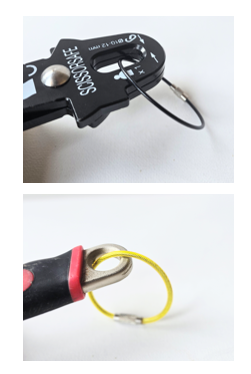
If the tool weighs less than 1kg, a Wire Loop will provide the easiest connecting point.
Product code SSTC008
If the Tool is heavier than 1kg. and less than 3kg. the Premium Wire Loop Connector with 3kg. load-rating should be suitable.
Product code RGTA3
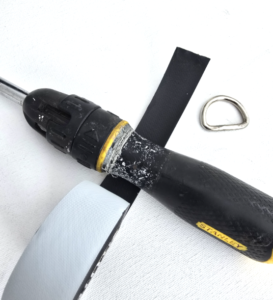
If the Tool doesn’t have a designed Connection Point, these can be made using Dee-Rings and Self-Amalgamating Tape.
This method of connection carries a Load-Rating of 3kg.
You can find instructions for attaching Dee Rings with Tethering tape further down this page.
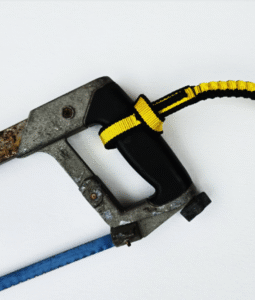
Tool Lanyards with Choke Loops prove an easy way to to connect to tools with closed handles because they don’t need to have Connection Points adding to them.
When placed out of the way of the users grip or holding position, Chokes are strong and easy to inspect and maintain.
ATTACHING A TOOL LANYARD SYSTEM TO YOUR BODY
Connecting a Tool to your Wrist.
Only a lightweight tool ( max. weight 1.5kg.) should be connected to the Users wrist such as pliers, screwdrivers, or small wrenches.
Coiled type Tool Lanyards (RGTL13) are useful when working with small tools attached to the users wrist because they contract to a small length that is less likely to become tangled.
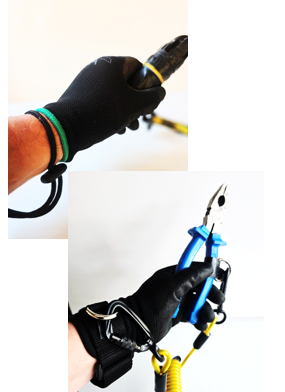
Connecting a Tool to your Safety Harness or Workbelt.
Depending on the size and geometry of the Tool and if it is likely to injure its user in a freefall drop situation, small tools with a max. weight of 2.5kg. can be connected to the front connection point on a Safety Harness or to a Workbelt.
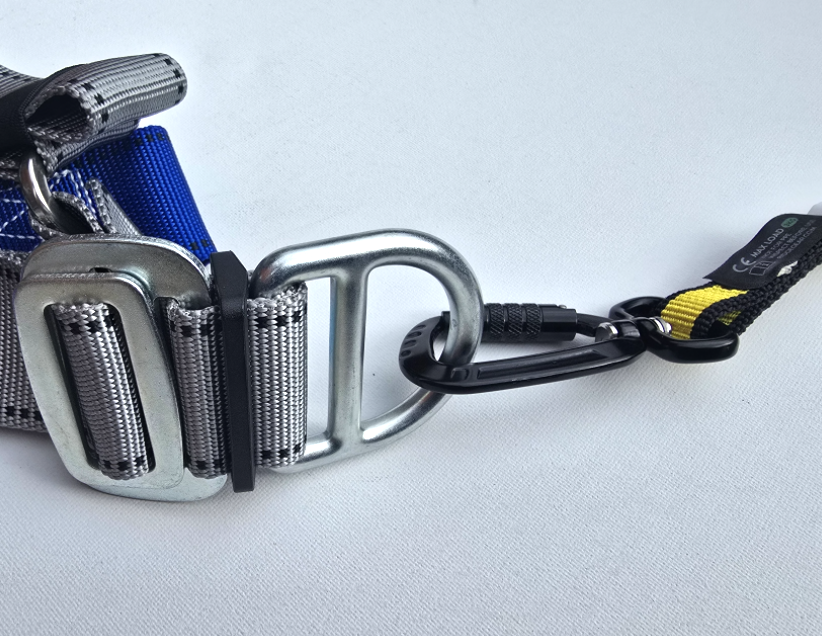
KEY POINTS TO CONSIDER WHEN ATTACHING A TOOL LANYARD SYSTEM TO YOURSELF.
-
Weight limit: Never attach tools heavier than 1.5 kg to your wrist, as a falling heavy tool can pull you down or cause severe arm and joint injury.
-
Check the rating: Ensure your wrist lanyard and attachment points match or exceed the weight of the tool.
-
Avoid snags: Keep the tether length as short as possible to prevent it from catching on surrounding objects or becoming a trip hazard.